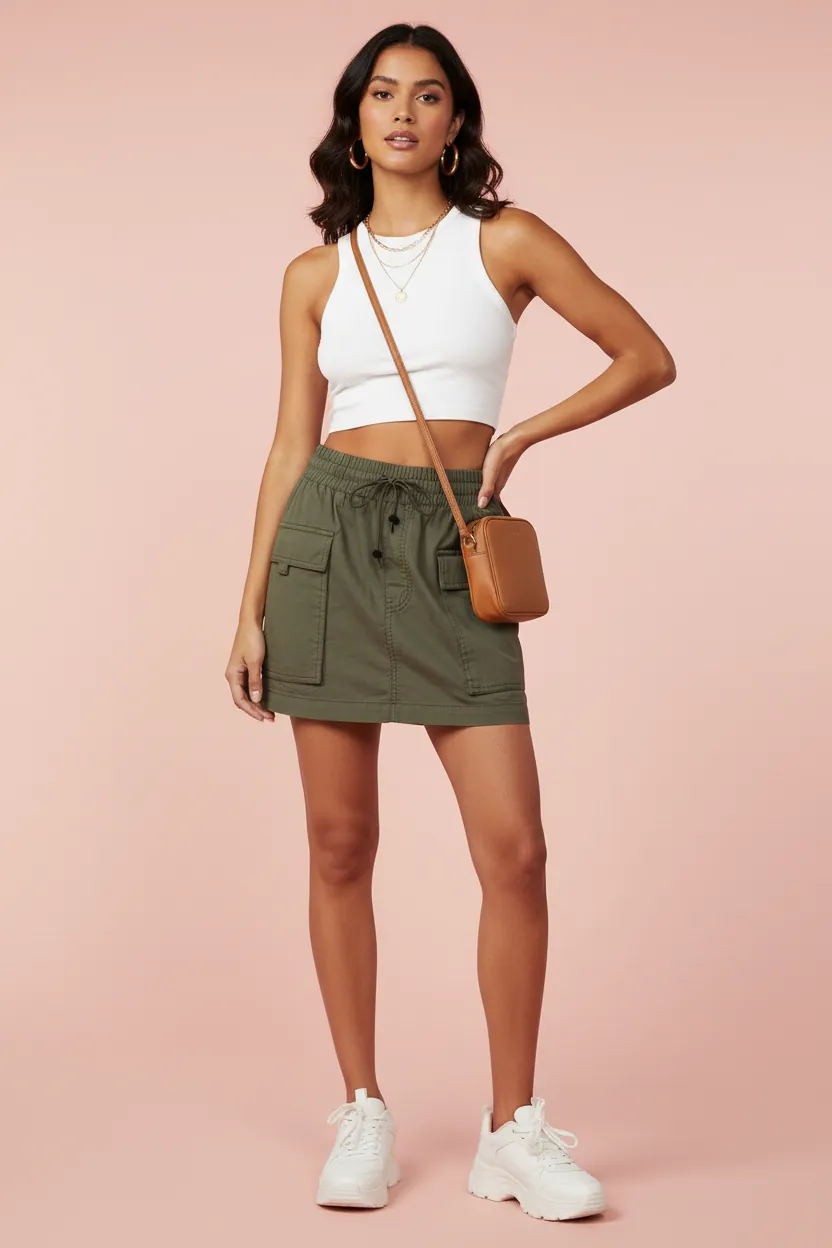
Vintage is not a dress-up box. It is the fast route to an outfit nobody else can copy. The trick is not recreating a decade from head to toe. It is choosing one piece with history, then letting the rest of the look live firmly in the present.
That approach makes pre-loved style feel easy, even when the piece itself is bold. A cropped knit, an unexpected print, a denim layer, or a utility skirt can all earn a place in a current wardrobe when the shape, styling, and attitude feel like you. Here is how to make it happen.
Start with one piece that does the talking
The cleanest modern-vintage outfits usually have one obvious lead. It might be a textured cardigan, a vintage-wash tee, a statement skirt, or a jacket with real personality. Let that piece set the mood, then give it breathing room. You do not need vintage shoes, vintage jewellery, vintage bag, and vintage hair at the same time. That is when the outfit starts doing a period impression instead of showing your style.
Choose the piece you would still wear if every other item in the look were basic. If it holds its own next to simple denim, a white tank, a black tee, or a clean pair of boots, it has range. It will earn more wears too, which is the whole point of a one-of-one find.
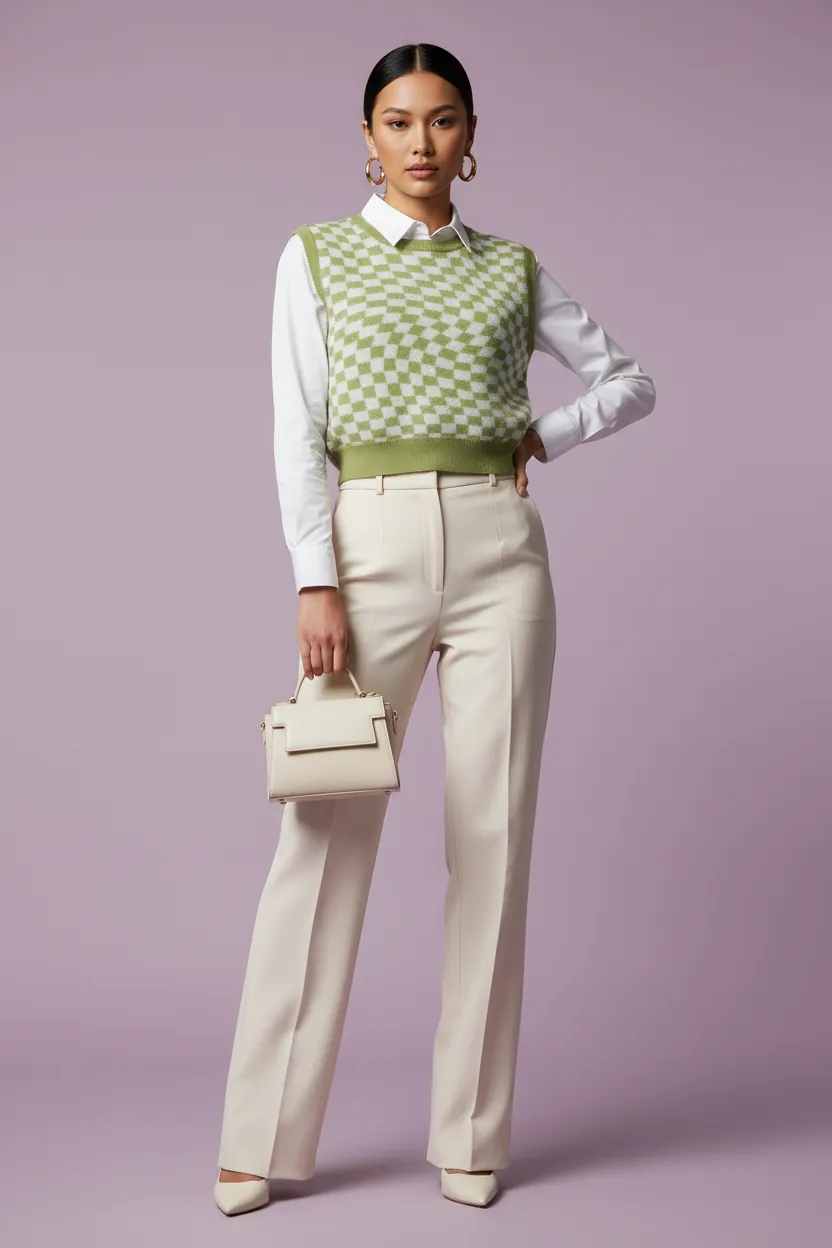
Let silhouette do the modernising
Current styling is less about chasing a specific trend and more about being deliberate with proportion. If your vintage piece is oversized, give it a cleaner or more fitted counterpoint. A roomy cardigan looks sharp over a fitted tank and straight-leg denim. A dramatic sleeve feels easier with a narrow skirt or relaxed trouser. If the top is close to the body, let the bottom bring volume through a wide leg, cargo detail, or full skirt.
Try the outfit on and check the full shape, not only the individual pieces. Can you see a waist, an ankle, a neckline, or a little structure? A point of definition keeps soft layers from swallowing you. It is also a more reliable styling tool than trying to force every piece into the decade it came from.
Use modern basics as your reset button
The strongest partners for a vintage find are usually already in your wardrobe: plain tees, crisp tanks, relaxed denim, smooth boots, white sneakers, a simple shoulder bag, or a minimal belt. These are not boring supporting actors. They give an unusual piece a place to land.
For example, a denim crop top can feel more grown and grounded with black trousers, a clean leather tote, and a simple shoe. A pre-loved graphic cardigan can work with dark denim and a plain tee. A vintage-inspired jacket becomes everyday when the rest of the outfit is almost quiet. Aim for contrast, not competition.
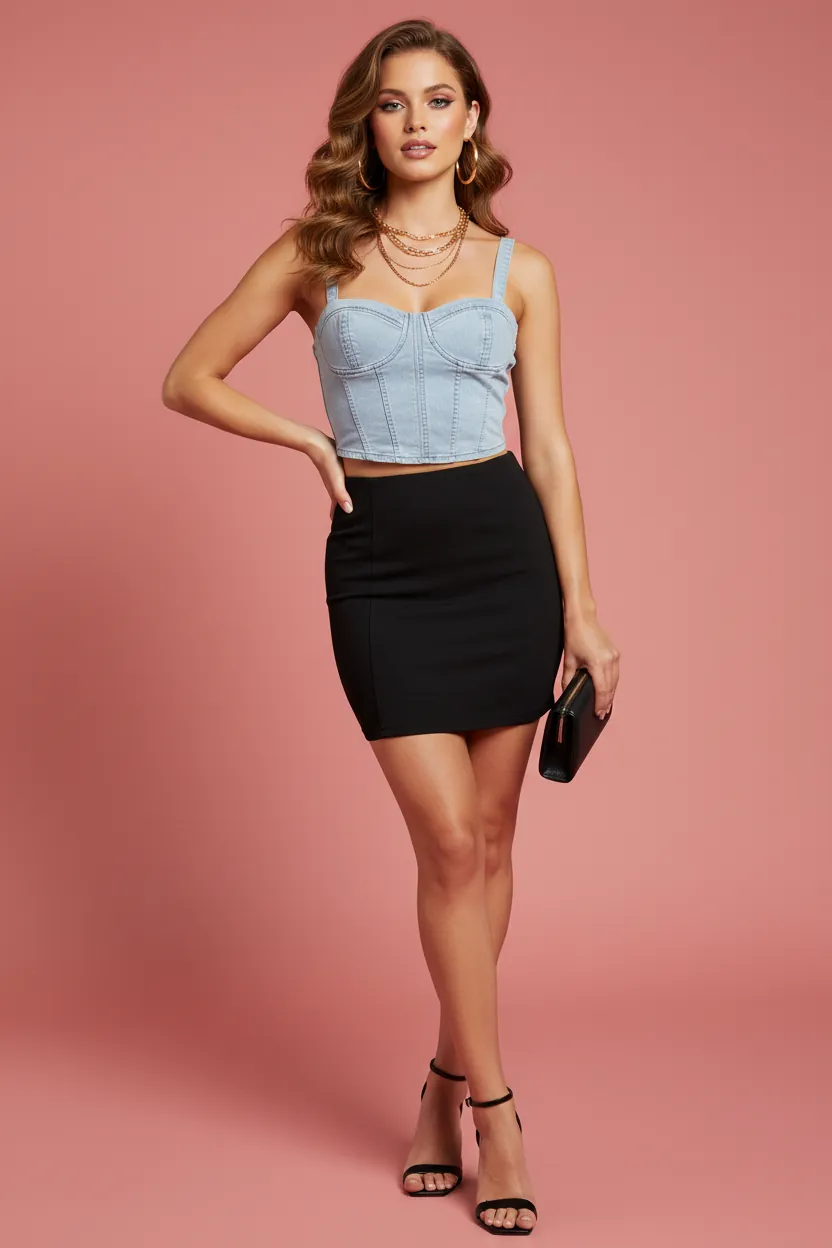
Mix eras by finding one common thread
There is no rule that says a nineties knit cannot meet a Y2K skirt or a western jacket cannot meet a sleek modern boot. The outfit simply needs a through-line. Match colour family, texture, scale, or attitude. A little silver hardware can connect a utility skirt to a cool metallic bag. A rich wine tone can pull together an old-school cardigan and a new pair of trousers. Repeating one idea twice makes the mix feel designed.
Do not over-explain the era. If someone can immediately name every decade you are wearing, edit one thing out. The most interesting outfits borrow references without becoming a costume. Think of vintage as an accent with a point of view, not a uniform.
Build around texture, then keep the rest clean
Older and pre-loved pieces often bring texture that new basics do not: open knit, washed denim, embroidery, a little fading, or a print that feels found rather than mass-made. Let that texture be the visual interest. Pair it with clean cotton, smooth denim, simple leather, or a quiet jersey layer.
A patterned cardigan does not need a patterned bag. A lace-trim top does not need more lace. One tactile element, one clean element, and one practical element is a useful formula when you are stuck. You get depth without visual noise.
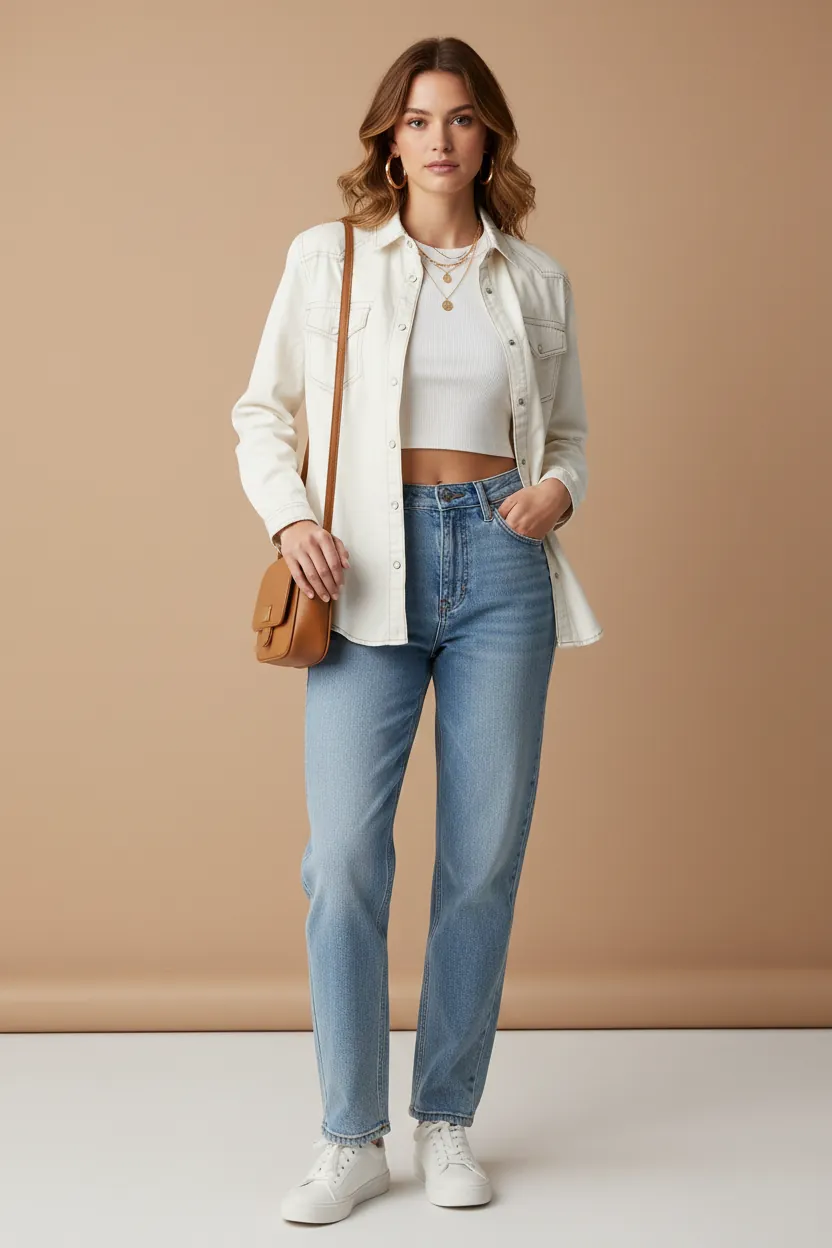
Make a repeatable outfit formula
When you find a piece you love, do not wait for a perfect occasion to justify it. Give it a formula. A formula is simply a combination you can recreate in different colours and fabrics without losing the energy of the original. It makes getting dressed faster, and it means a special find does not end up living on a hanger.
Start with the item that has the most personality. Then add a grounded base, a layer if you need one, and one finishing detail. The base keeps the outfit functional. The finishing detail makes it look intentional. That could be a belt, a strong shoe, a small shoulder bag, or a clean hoop. You are not building a look from scratch every time. You are creating a signature you can return to.
- For everyday: vintage knit or statement tee + straight-leg denim + low-profile sneaker + simple bag.
- For a dinner plan: standout skirt or dress + fitted layer + clean boot + one piece of jewellery.
- For a casual edge: old-school cardigan or jacket + tank + relaxed trouser + structured bag.
Notice that each formula has one strong item and a quiet supporting cast. It still leaves room for your own taste. Swap the sneaker for a heeled boot, the denim for a mini, or the tank for a crisp button-down when the mood changes. The structure stays useful even when the pieces change.
Use colour like a stylist, not a highlighter
Vintage and pre-loved finds often arrive in colours you do not see everywhere, and that is part of the appeal. The easiest way to make a bold colour feel wearable is to give it a neutral partner. Deep berry, mustard, teal, cream, black, and denim all get sharper when the rest of the look is edited. You do not need to match every shade exactly. You need a palette that feels chosen.
Try a two-colour rule when you are unsure. Let the vintage piece supply one colour family, then choose a neutral or denim that supports it. Add one metal or shoe colour as a finish. This prevents an unusual print or bright knit from feeling accidental. It also lets the details, texture, and shape stay visible instead of getting lost in a riot of competing shades.
Know when to stop adding
Editing is where a good vintage outfit becomes a great one. Put the whole look on, then remove the last thing you added. If the outfit suddenly feels clearer, you found the answer. This is especially useful with prints, jewellery, belts, and bags. A distinctive piece already brings a point of view. It does not need a committee.
Use a mirror check from a few steps back. The first thing your eye notices should be the feature you actually want to highlight: the jacket, the knit, the denim, the waist, the shoe. If your eye bounces everywhere, simplify the outfit with a quieter layer or accessory. Confidence reads more modern than complication ever will.
This is also why comfort matters. If you are constantly tugging at a hem, adjusting a neckline, or worrying about a layer, the outfit will never feel like yours. Keep the pieces that let you move, sit, and take up space. The right styling choice should make you feel more like yourself, not more managed.
Take a moment before you leave to check the outfit in movement, not just standing still. Walk a few steps, sit down, lift your arms, then make the one adjustment that helps the outfit feel natural. That small test is how a look goes from styled to lived-in.
Make fit your non-negotiable
A great vintage piece does not have to fit like it was made yesterday, but it does need to feel wearable. Check the shoulder line, arm movement, rise, and length before you fall for the story. A tailor can often refine a hem, waist, or sleeve, but do not buy a piece that needs a full rescue just because it is rare.
For delicate older garments, care matters as much as styling. The Smithsonian recommends gentle handling for antique textiles, including clean hands and avoiding anything that can snag fragile fabric. Its storage guidance also favours avoiding sharp folds and airtight plastic around sensitive textiles. Treat special pieces as special, and they will stay in your rotation longer.
Style for the life you actually have
The best test is simple: where would you wear it this week? For brunch, pair a statement top with straight-leg denim and a boot. For a casual date, let a mini or cargo skirt meet a fitted tee and an easy jacket. For a night out, choose one strong texture, then finish with a sleek shoe and understated jewellery. You are not preserving the piece behind glass. You are giving it another chapter.
Choosing pre-loved is also a style decision with a wider payoff. The U.S. Environmental Protection Agency notes that discarded clothing is the main source of textile waste in municipal waste streams, while reuse keeps textiles in circulation before they reach that stage. The most sustainable piece is not necessarily the one you never wear, it is the one that becomes a favourite.
Give it a real-world test run
Before you decide a piece is difficult, wear it somewhere low-stakes. Coffee, a quick errand, lunch with a friend, or a casual workday gives you a better read than a mirror ever can. You will notice if the sleeve needs rolling, the hem wants a different shoe, or the proportions come alive with a half-tuck. Those small discoveries are how a pre-loved piece turns into a reliable favourite.
Take a quick photo when the outfit lands. Not for the internet, unless you want to, but for your own reference. Over time, you will see the combinations you repeat: perhaps you love a structured shoulder with a relaxed bottom, or a short top with a long layer, or one textured piece against a simple base. That is personal style taking shape. It does not need a trend forecast to be valid.
Find the piece, then make it yours
Strut and Style Boutique curates one-of-one finds, pre-loved pieces, and ready-to-wear outfits for women who want a closet with a little more character. Start with the pre-loved edit, browse tops for the easiest statement-maker, or explore curated bundles when you want a look with the guesswork already handled.
There is no prize for looking period-perfect. The win is wearing something with a past in a way that feels completely like your future self.
Questions, answered
How do I start wearing vintage clothing?
Start with one piece that already feels like you, such as a knit, jacket, tee, skirt, or accessory. Pair it with dependable modern basics, then notice which proportions make you feel most confident. The goal is a repeatable outfit, not a costume.
Does vintage clothing have to come from one decade?
Not at all. Mixing decades is often what makes an outfit feel current. Use one shared element, such as colour, texture, or silhouette, to make the pieces feel intentional together.
How do I care for older or pre-loved clothing?
Check the garment label first and treat delicate pieces gently. Store knits folded, protect special fabrics from snags, and avoid over-washing. When a piece feels especially fragile, use a professional cleaner who understands vintage textiles.
What vintage pieces are easiest to style?
A strong cardigan, denim jacket, graphic tee, sweater vest, easy skirt, or tailored trouser is usually an easy entry point. Each one can work with jeans, simple shoes, and the accessories you already reach for.
For textile care and reuse context: Smithsonian textile storage guidance, Smithsonian handling guidance, and EPA textile materials data.